

Workshop in Creating with Claude Code in the Desktop App (for behavior analysts)
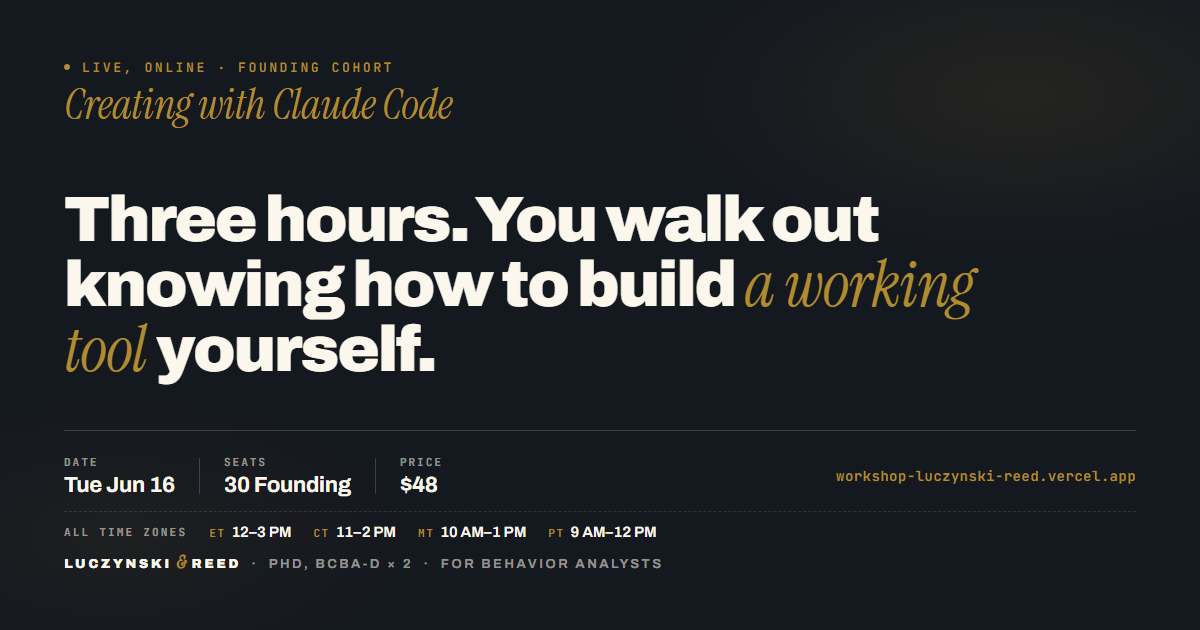
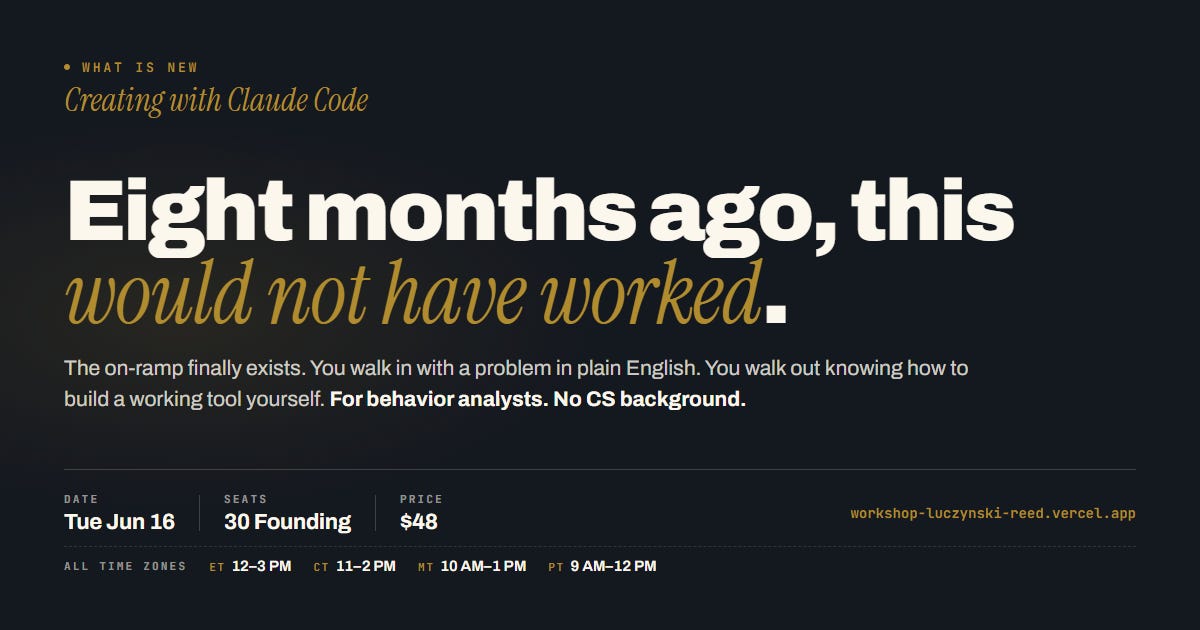
Three hours. You walk out knowing how to build a working tool yourself.


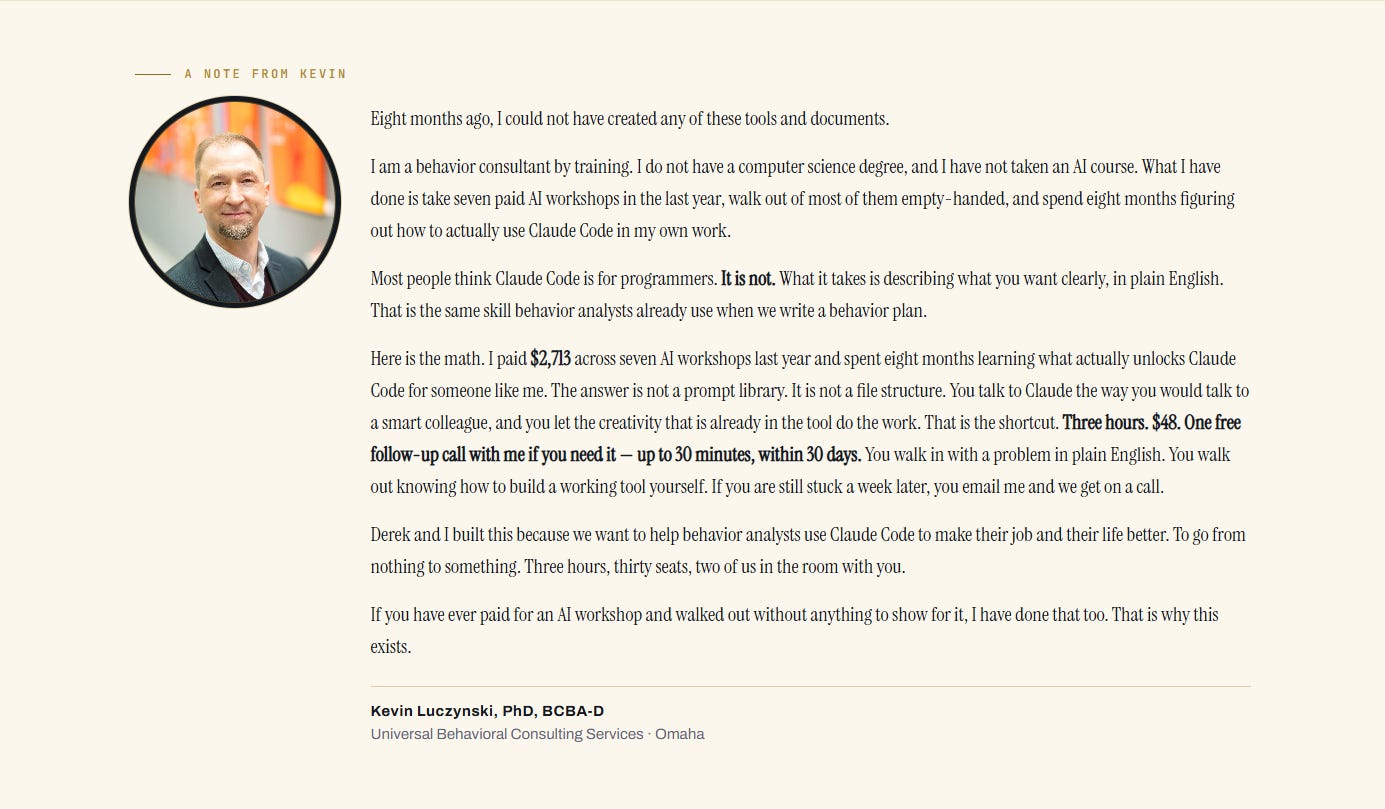
Dr. Derek Reed and I have been meeting every week for the last eight months.
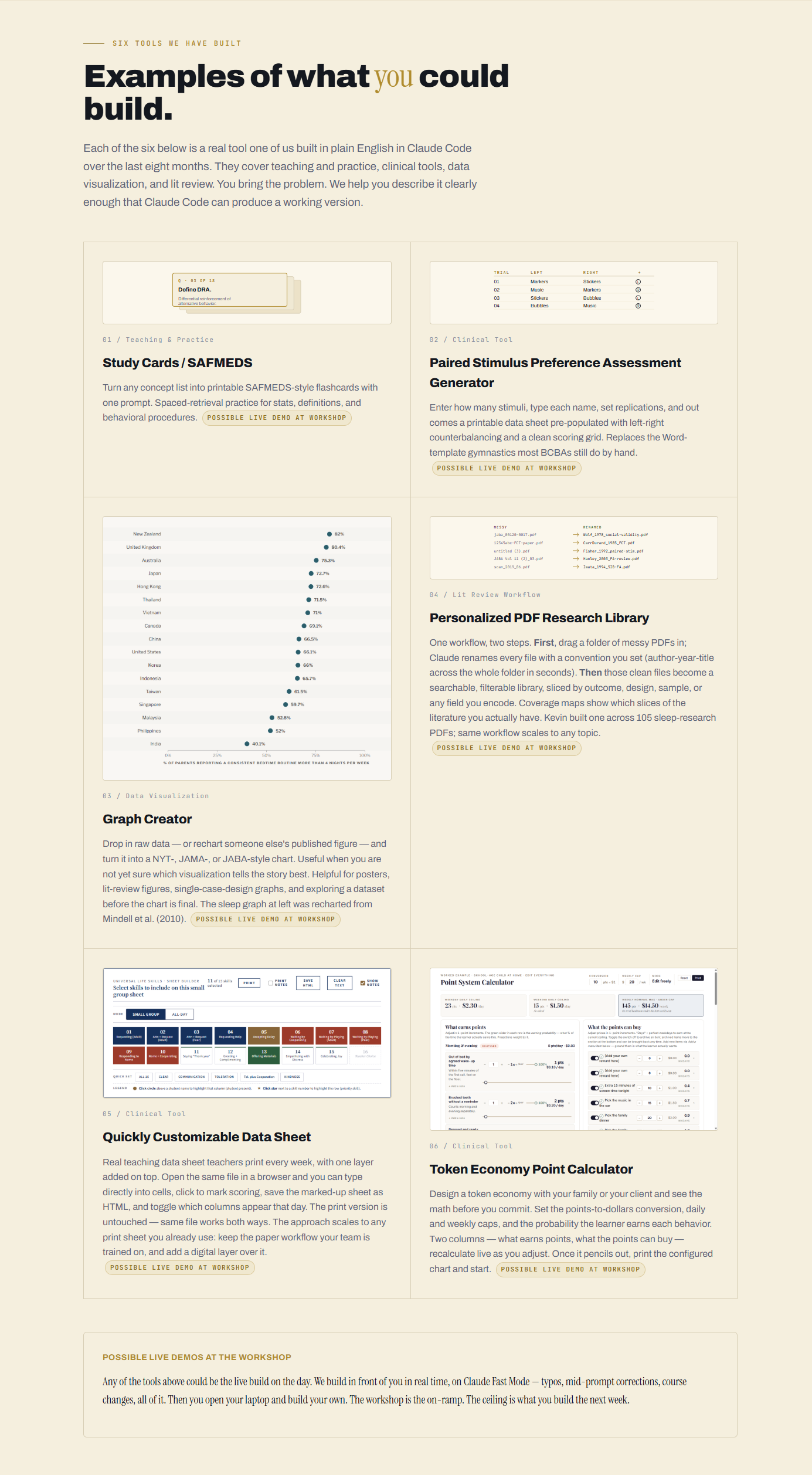
A good chunk of time goes to demoing what we have built from scratch in plain language with Claude Code: documents, web applications, and other tools.
As we have talked to colleagues in behavior analysis, many are using AI to chat, discover information, and learn. Not enough are using it to create documents and tools that enhance their personal and professional interests. We put together a three-hour introductory workshop. We want to help people in the field of behavior analysis get started with tools that let you interact with documents on your computer and create new ones from scratch, by simply talking through what you want.
Tuesday, June 16, 2026, from 12pm to 3:00pm Eastern (11-2 Central, 10 to 1 Mountain, and 9 to 12 Pacific).
This first workshop is geared toward Board Certified Behavior Analysts (BCBAs), Registered Behavior Technicians (RBTs), faculty, and graduate students.
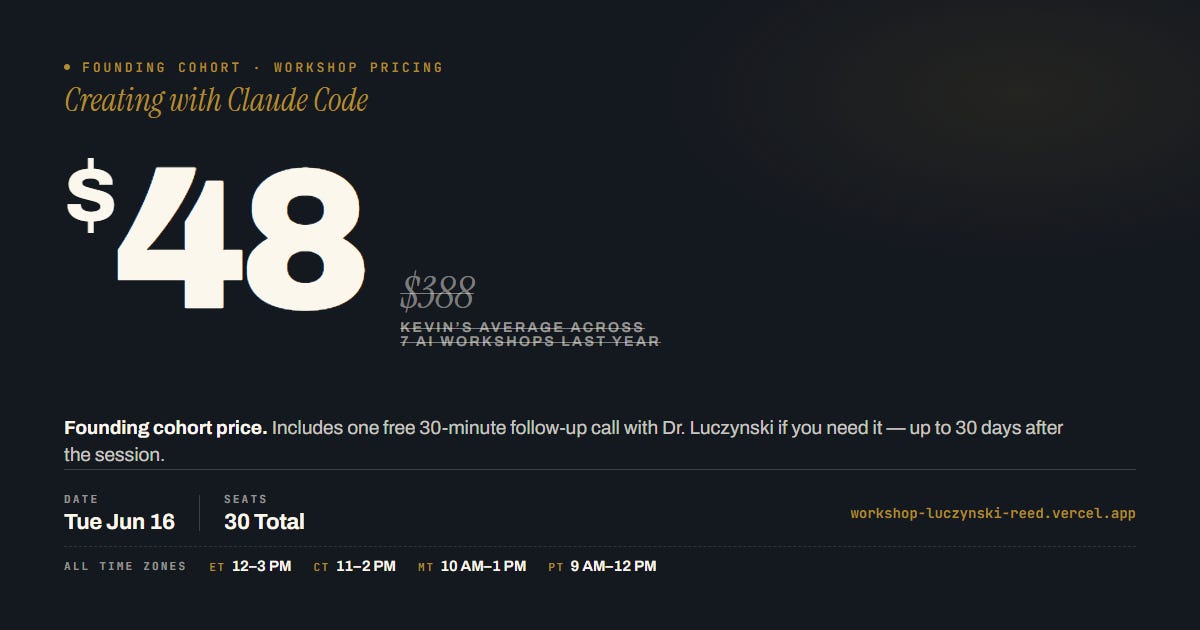
$48 for the founding cohort. 30 seats.
There are no CEUs for this workshop. We will not teach ethics.
If you are already creating documents and tools from scratch with AI, this workshop is not for you.
We will not be discussing special prompting techniques or special folder organizations. Just iterating with Claude Code Desktop until you like the tool or document you have created.
Please check out this page to learn more and register:
A final note: I have spent around $3,000 on half-day and full-day workshops covering how to create with AI. To my disappointment, typically about a third of the time has been used to simply help attendees get properly setup for the workshop. As such, you cannot register for our workshop until you confirm that you have the basic setup intact. A task analysis of how to accomplish this for Windows and Mac computers is detailed in the link above. If it is not working, immediately reach out to me for additional assistance.
Best,
Kevin and Derek
PS., As a personal use case, I wanted to understand the different ways to measure the contributions of a basketball player to a team’s performance. To start, I wanted to learn about how the different iterations of the Plus-Minus Metric as a measure of player performance have changed over the years. So, I attempted to build a visual tutorial. Check it out here:
Dr. L is an incredible teacher. My life, my practice, my research, and my ABAI presentations are different because of his instruction in tool creation. I hope I am the first one to sign up for this class, but you should be the second. Don't miss out.