What Surprised Me When 977 Parents Were Asked About Sleep in September 2025
Pediatric Sleep Science - In 2015, two expert panels reviewed over 1,000 studies to set children's sleep guidelines. A decade later, most parents still do not know the numbers.

Editor’s Note: Most research in this series comes from scientific papers that may not reach parents, teachers, and behavioral health providers. I look through articles and use large language models to help extract values from tables, figures, and supplemental documents to create visuals. As such, you likey will not find the exact graphs below in the original articles. When values had to be read from figures rather than tables, I used WebPlotDigitizer to extract the values. The original sources are cited below every graph so you can check the data yourself. If you spot an error, let me know.
If you prefer to view the following content as a visual scrolling story, click here.
The Study - National Sleep Foundation. (2026). Sleep in America Poll: A focus on America’s youngest sleepers
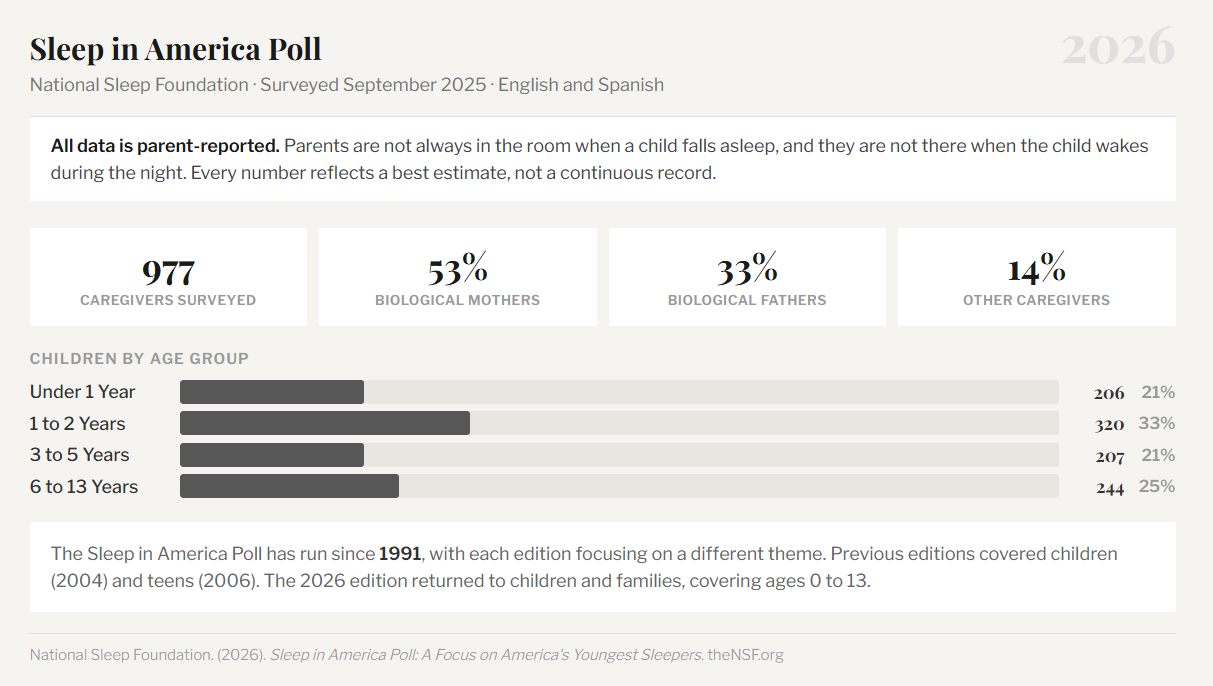
The National Sleep Foundation has conducted the Sleep in America Poll since 1991, with each edition focusing on a different theme (e.g., teens, technology). In 2004, The National Sleep Foundation surveyed parents of children up to age 10. The 2026 edition returned to children and families, covering ages 0 to 13.
The NSF surveyed 977 parents and caregivers in English and Spanish around September 2025. The sample included 53% biological mothers, 33% biological fathers, and 14% other caregivers (i.e., step-parents, grandparents, aunts, and uncles). The children are represented four age groups: 206 under 1 year old, 320 ages 1 to 2, 207 ages 3 to 5, and 244 ages 6 to 13.
All of these data are based on parent report. Parents are not always in the room when a child falls asleep, and they are not there when the child wakes at night without making enough noise to alert them. Every number in this poll reflects a subjective estimate.
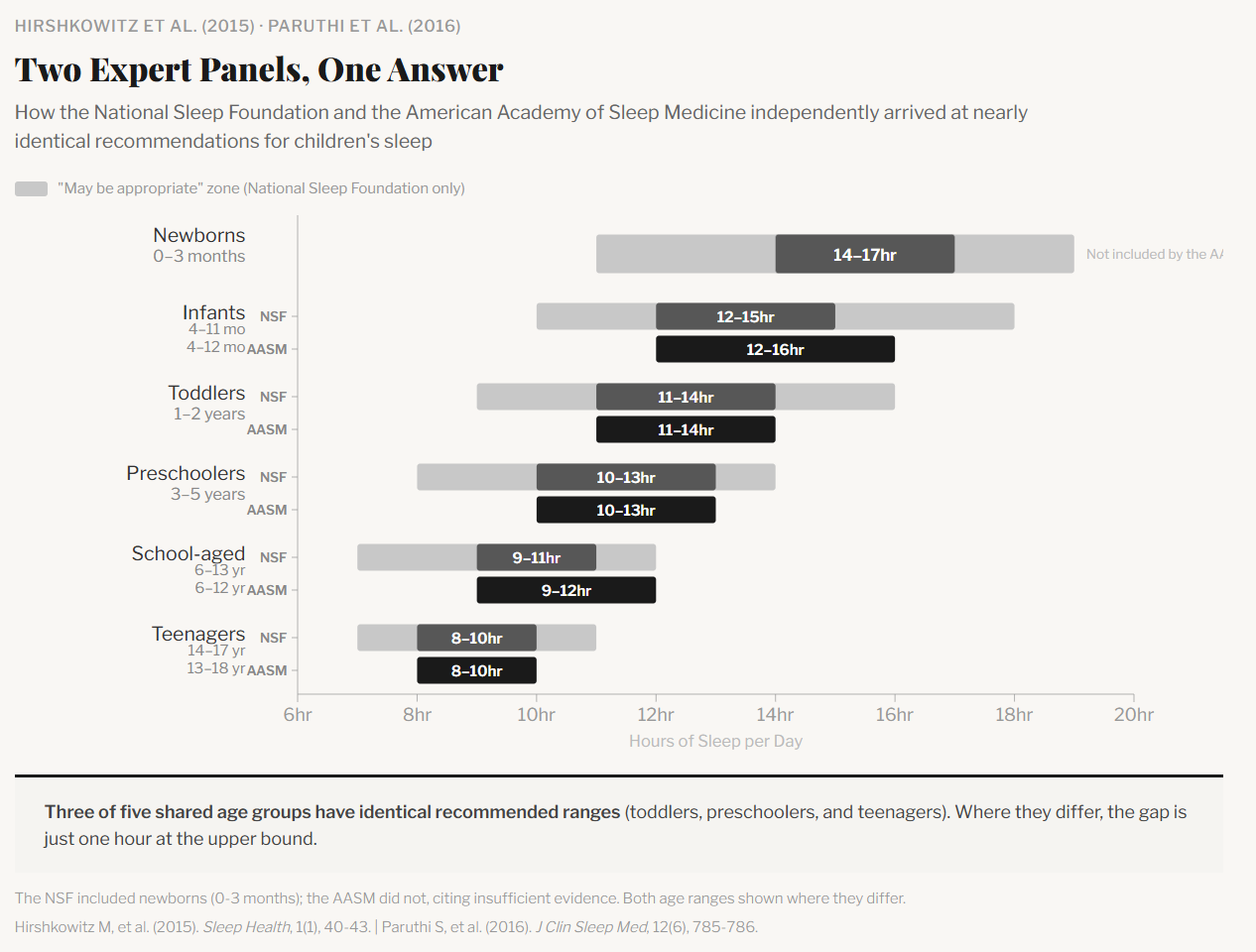
The Commonly Referenced Standards for Sleep Durations
In 2015 and 2016, two independent organizations reviewed the evidence as perceived by sleep experts. The National Sleep Foundation convened 18 experts who reviewed 312 studies. The American Academy of Sleep Medicine assembled 13 experts who reviewed 864 studies. Three of five shared age groups got identical ranges. Where they differed, the gap was one hour.
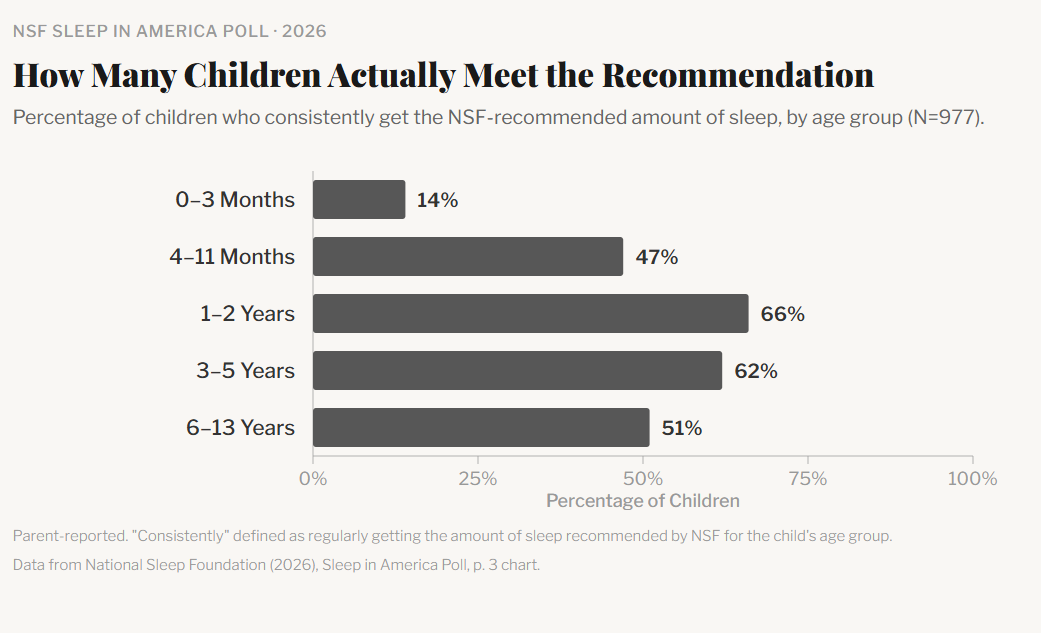
The National Sleep Foundation’s 2026 survey data used the Hirshkowitz and colleagues (2015) ranges as the benchmark when they surveyed 977 parents. They asked: How much sleep does your child need? At every age group, the average parent estimate fell below the recommended range.
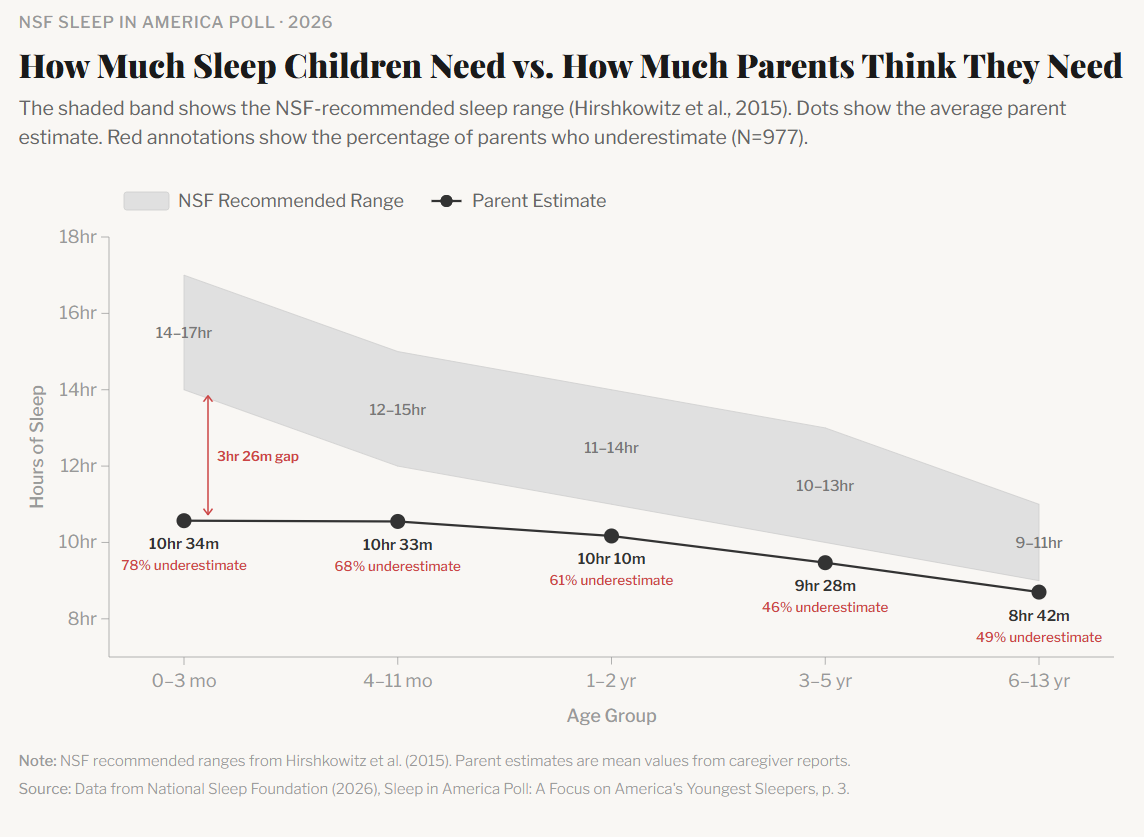
Because parents are not familiar with the recommended sleep ranges, it may be one factor leading to children not meeting the age-based sleep recommendations.
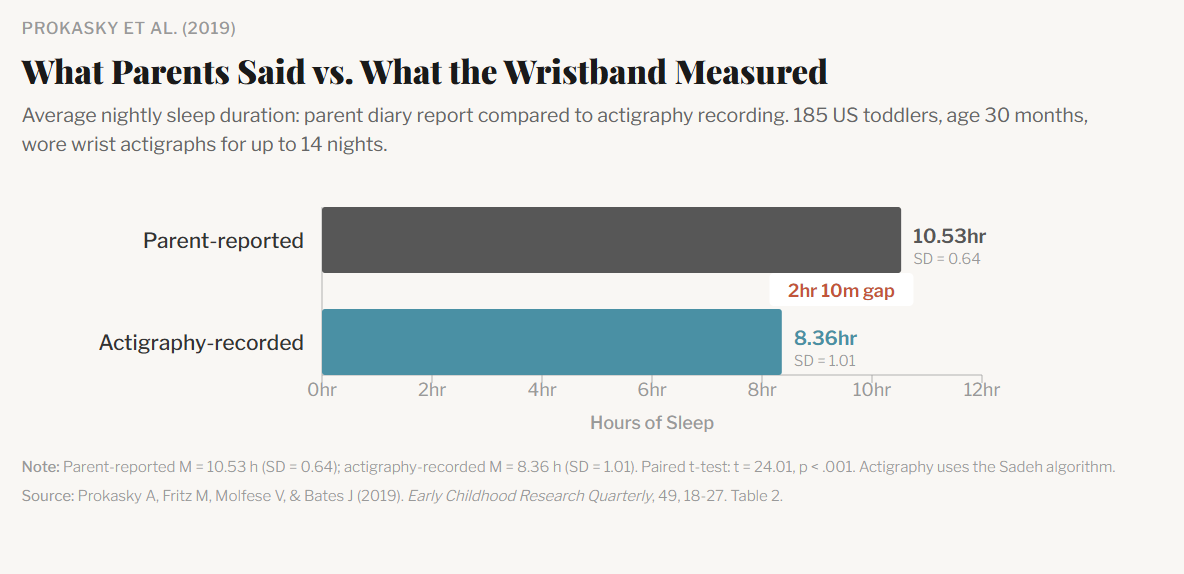
In Addition to Parents Underestimating How Much Sleep is Needed, Parents Overestimate their Child’s Sleep when Compared to Objective Measures (i.e., actigraphy).
From Prokasky and colleagues (2019), parents overestimate how much their young child sleeps. When 185 toddlers wore wrist actigraphy devices for two weeks, parents overestimated their child's sleep by 2 hours and 10 minutes per night.