

Distributed, Embedded Completion of the Bedtime Routine using Book Flaps. A Science-Based Tactic Being Built within Sleepy Star
The Journey of Publishing a Children's Book as a Bedtime Aid for Parents

Editor’s Note: Derek and I have never published a children’s book, and we are doing it as independent publishers. We know that other people may want to improve and entertain the world through publishing their own children’s book. We want to share our experience along the way.
Children’s Book Journey Update 02: Gary Wilkinson, our British illustrator who resides in Japan, as of June is solely focused on crafting the character sketches for Sleepy Star.
As we wait to review his creative work, Dr. Derek Reed, Melinda Martin (our Editor and Literary Agent), and myself have mapped out the book pages for Sleepy Star: A Children’s Book as Bedtime Aid for Parents. Important Note: All the images below are for illustrative purpose; they do not represent the illustrations that will be used in the finalized book.
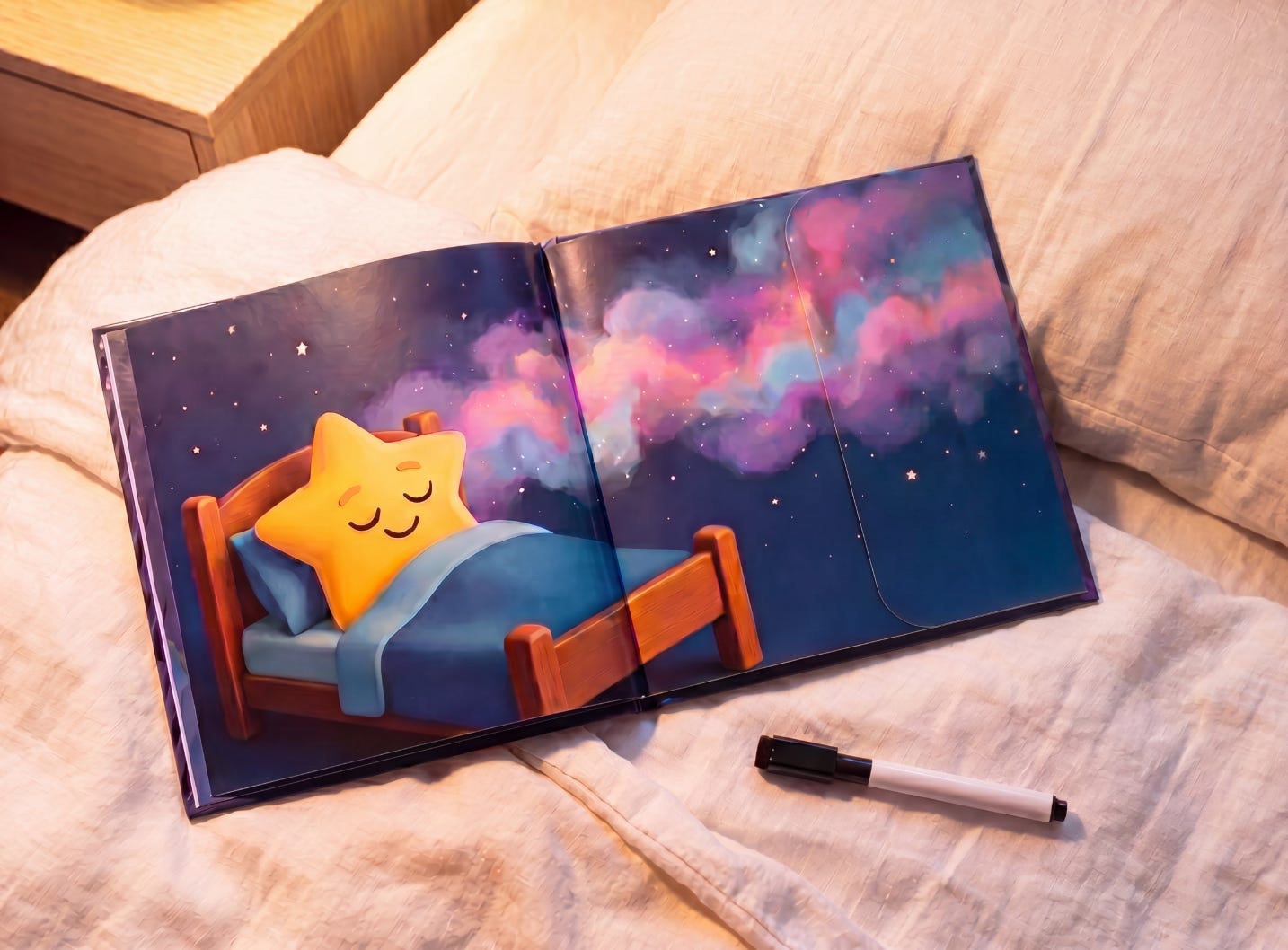
One feature of the book-mapping process is determining the distribution of pages that entail a flap that folds out and is dry-erase.
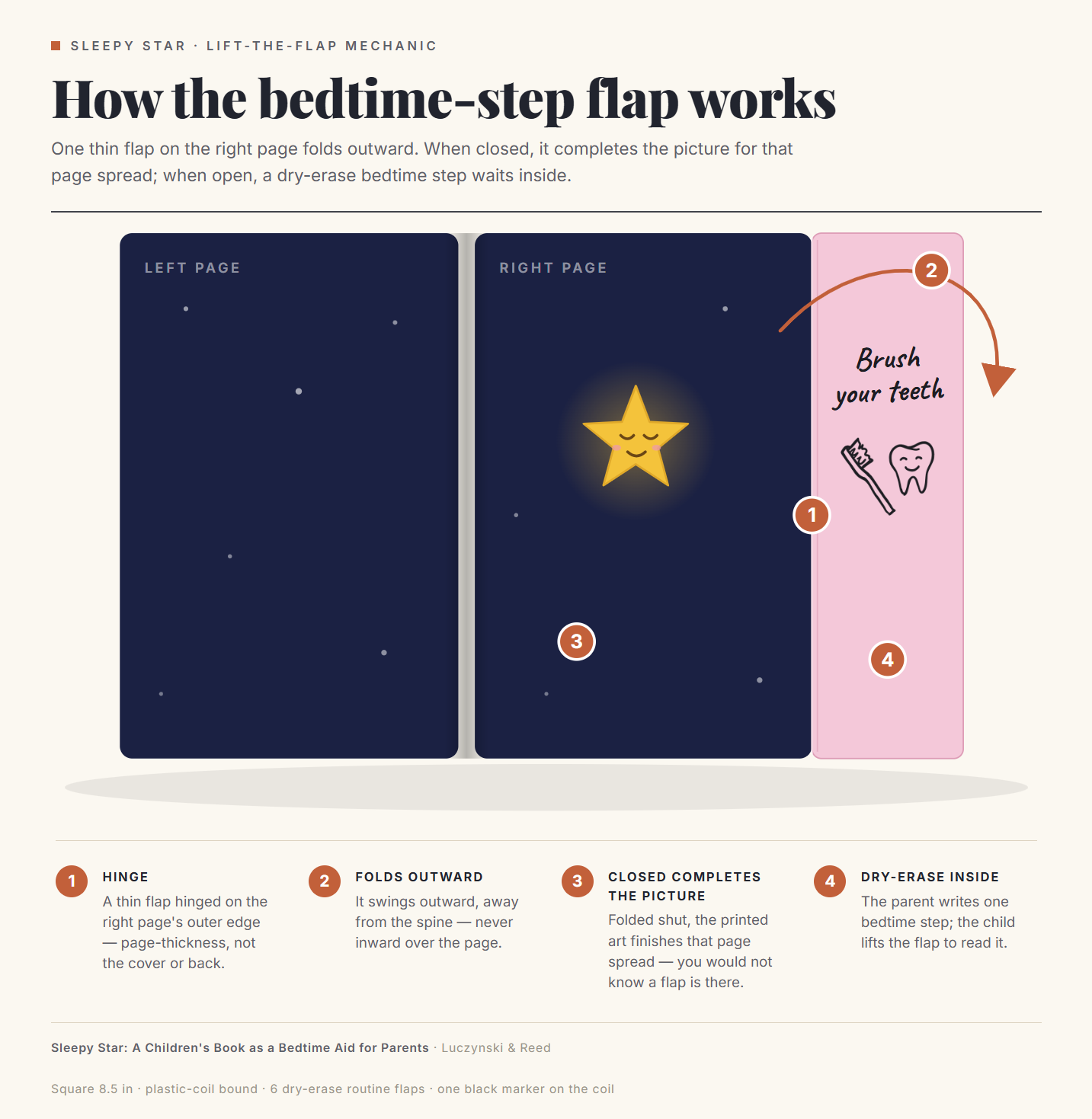
Each page with a dry-erase flap as illustrated above and below will be used in two ways.
Primary Use: To complete a step of the bedtime routine. One neat aspect is that the order and type of bedtime step is personalized to the family and what would best for each night.
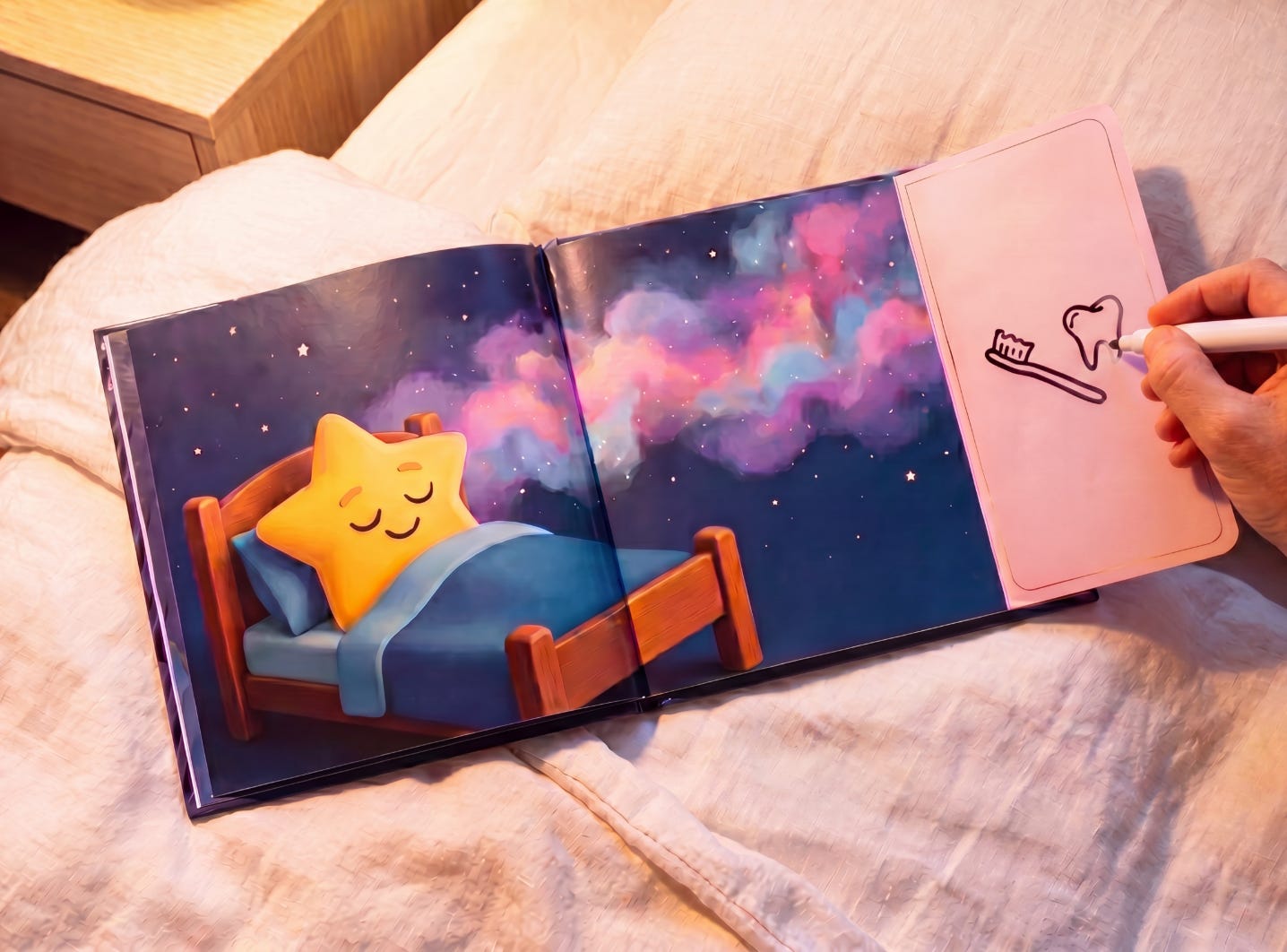
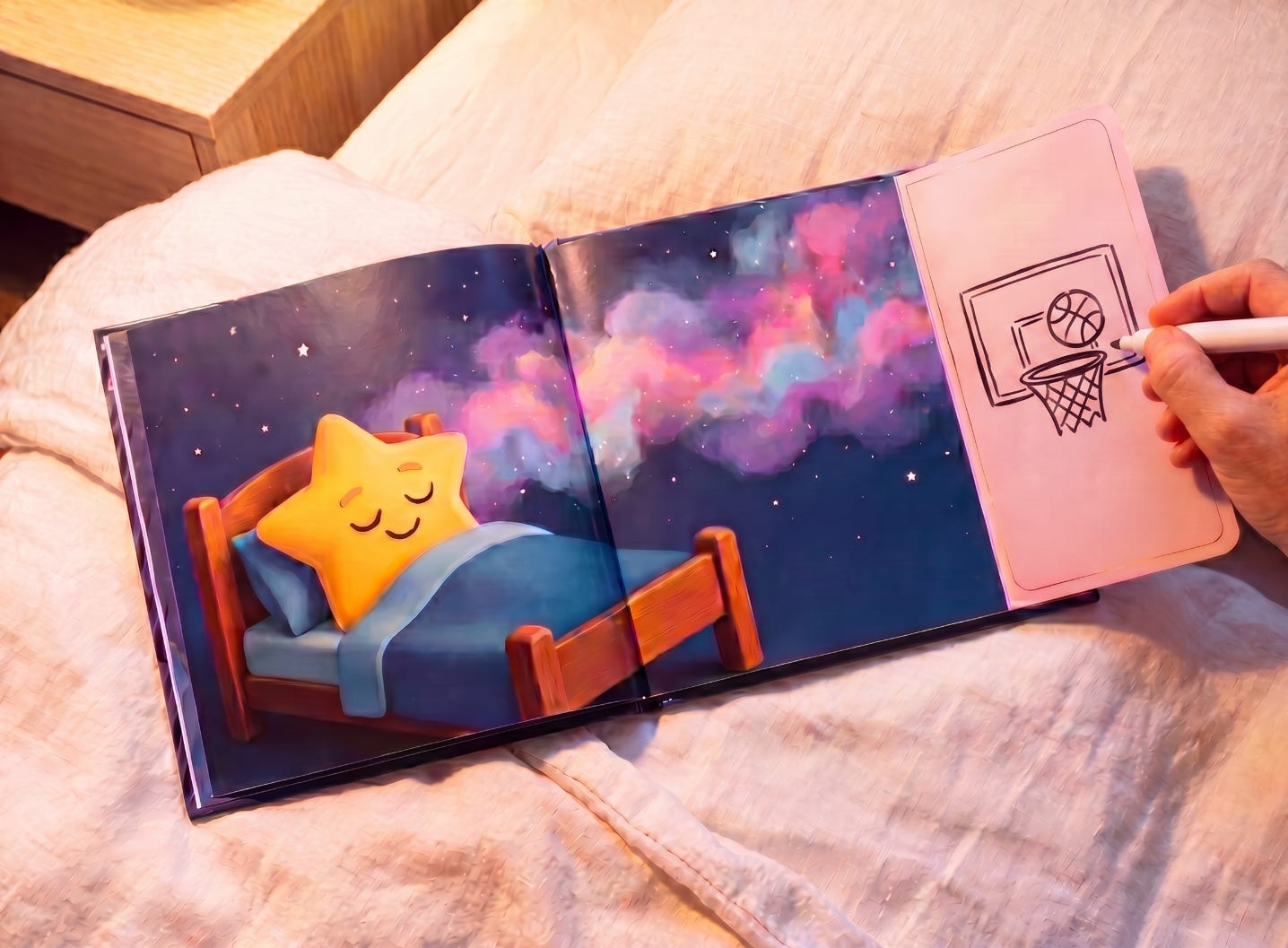
Secondary Use: Sometimes a dry-erase book flap reveals something fun to do for a short period of time (e.g., 3 minutes) instead of a step in the bedtime routine. In other words, we want parents to build in unpredictable fun moments such that when their child turns the flap, they may get to return to some of the fun stuff. In this case, shooting a bit more on the Little Tikes basketball hoop in the basement.
If you think this is neat and what to support us with your attention, please subscribe to our newsletter (i.e., this substack).
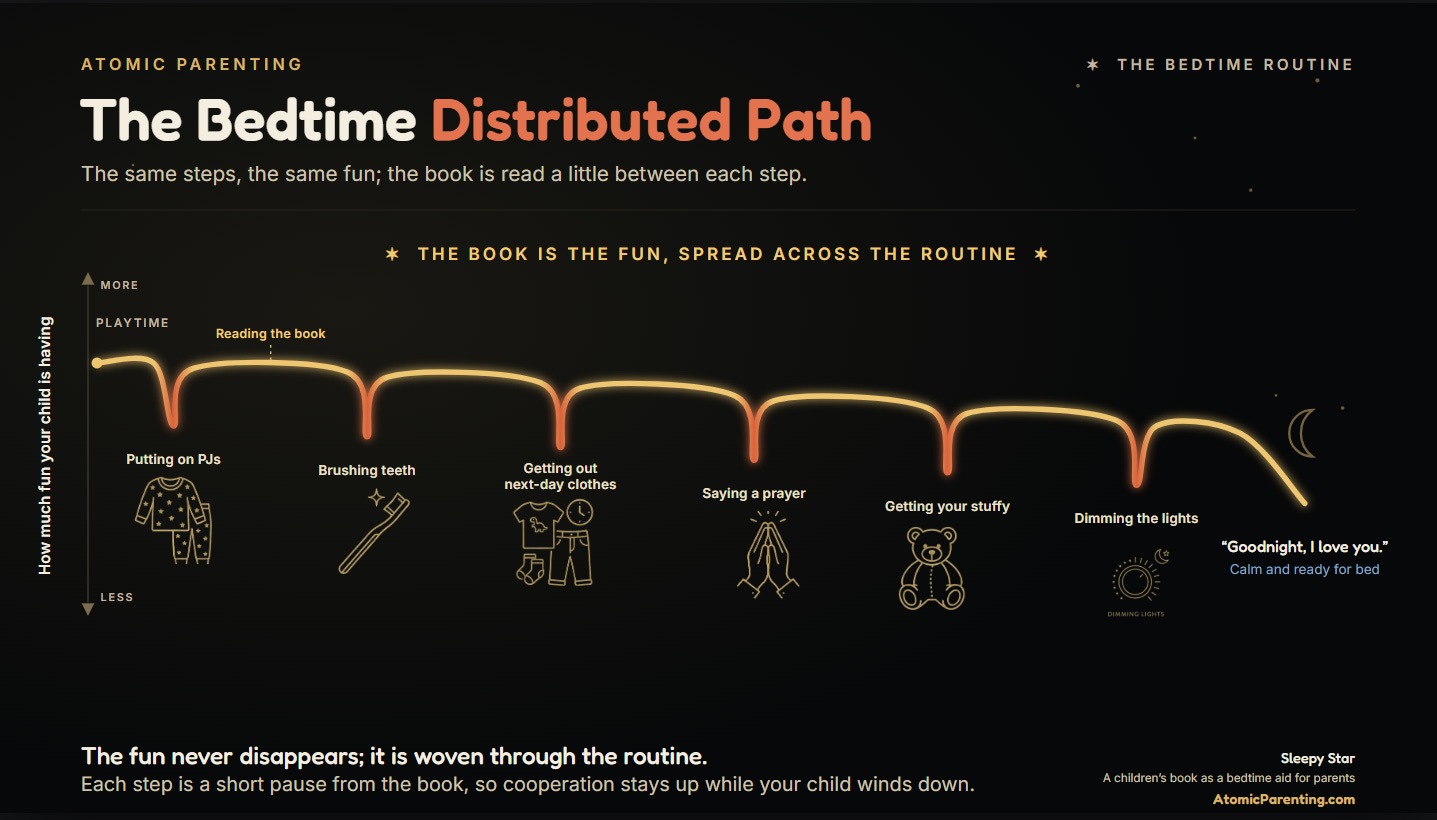
Embedding dry-erase flaps throughout the book allows parents to avoid The Bedtime Cliff, during which there can be a stark shift for fun to little fun when the bedtime routine starts.
We want to avoid shifting from a period of love and interaction during playtime to completing the less desirable steps associated with the bedtime routine.
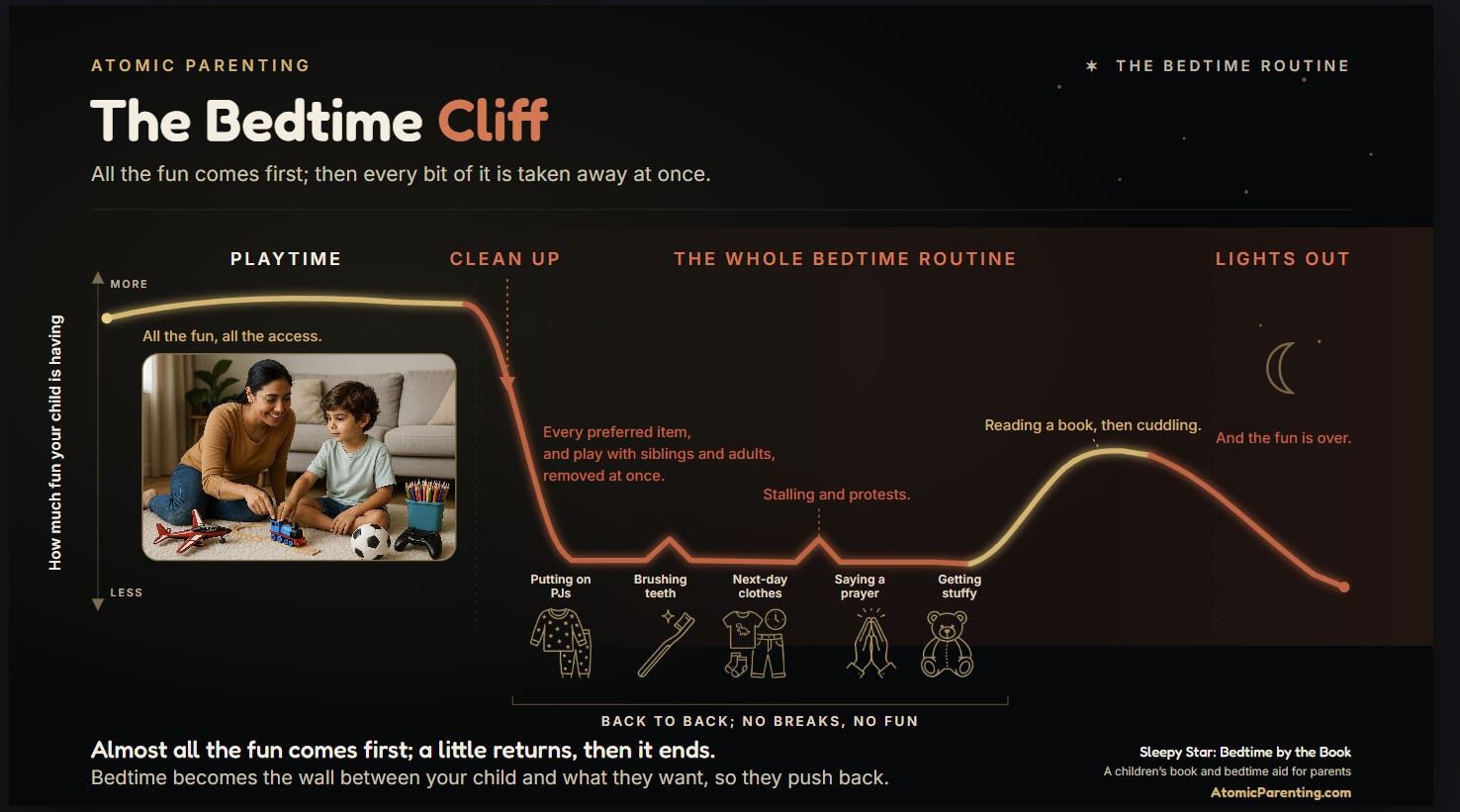
Instead, we are working to create within Sleepy Star a more gentle and peaceful way to complete the bedtime routine. That is, to avoid the Bedtime Cliff, we are building the Distributed Path. That is, distributed completion of the bedtime steps throughout the book.
Derek and I will share more about how we embedded multiple evidence-based tactics within this children’s book. Please keep reading.
Sounds like an amazing book! Almost wish I had kids with whom to share it. Great ideas. Thanks for the links and resources!